The 3-Minute Creativity Trick That Transforms Your Child's Meltdown into Connection
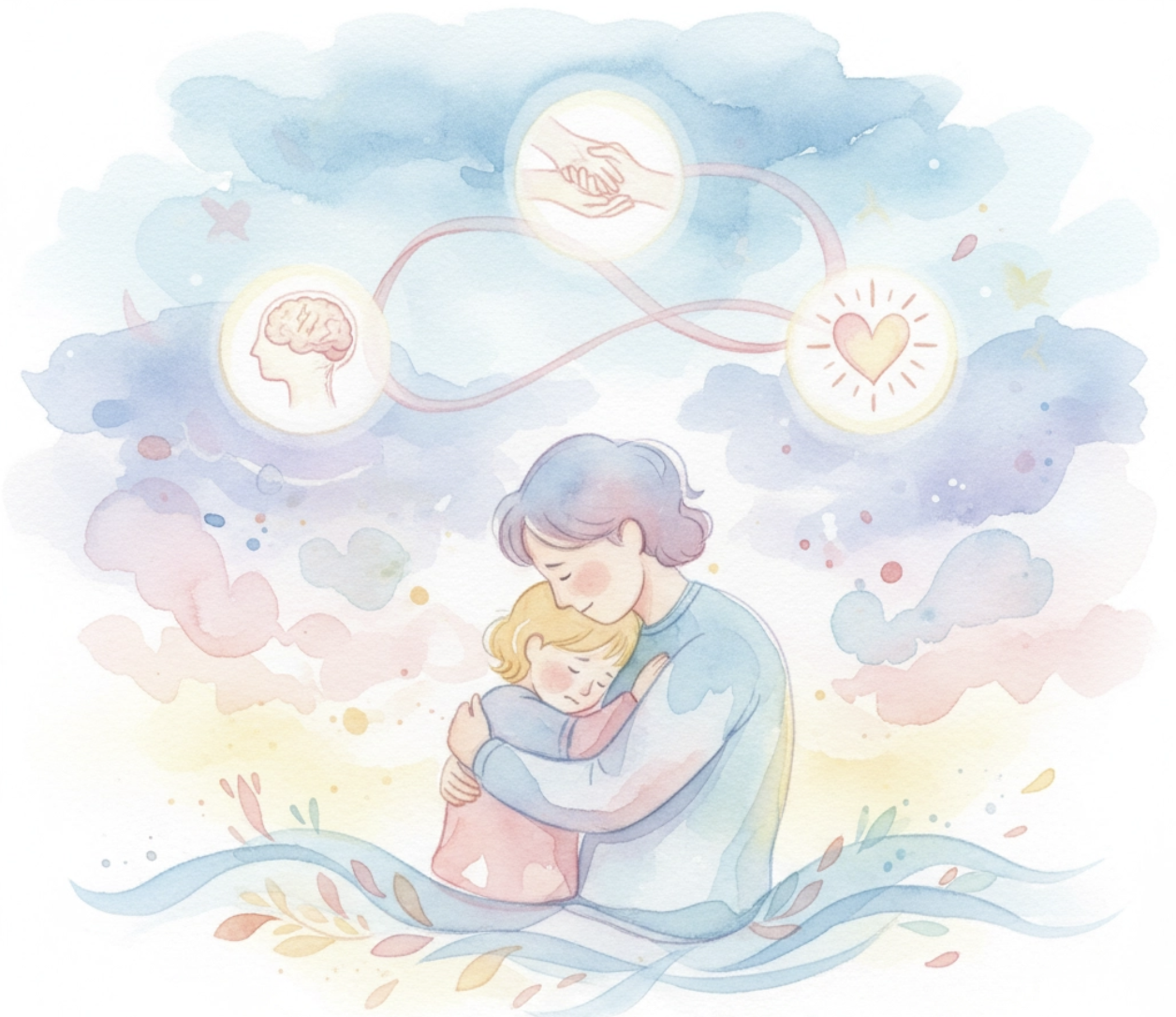
Picture this: It's 5:47 PM on a Tuesday (because meltdowns never happen at convenient times, do they?), dinner's half-prepared, and your 4-year-old has just launched into full-scale meltdown mode because their sock "feels wrong." True Story! You know that feeling when your chest tightens, your own emotional regulation starts wobbling, and every parenting book you've ever read flies out of your head?
I've been there. Oh boy, have I been there.
Last year, we were visiting family a few hours away, when my 4-year-old nephew had a meltdown because his older brother had touched his cereal bowl at breakfast. A typical moment in any family day, big brother loves to wind up his little brother, but it was clear he was struggling to regulate, and so was his mum. My heart went out to her because I could see that look I've felt so many times myself, total overwhelm. It is so acute that it literally makes my stomach tie itself in knots.
But here's what I discovered over the past two years of learning, studying and running my Therapeutic Art course for families: those moments of emotional chaos? They're actually golden opportunities for connection. And I'm about to share the simple 3-minute creativity trick that completely transformed how I approach meltdowns, both as a parent and a creative educator.
Why Traditional Meltdown Advice Falls Short
Have you ever noticed how most meltdown advice sounds great in theory but crumbles under pressure? "Stay calm," they say. "Use your soothing voice." "Validate their feelings."
Don't get me wrong, these strategies have merit. But when your child is melting down because their banana broke in half, |(OMG! that one really sent me over the edge!) or because you gave them the blue cup instead of the red one (even though they specifically asked for blue five minutes ago), validation alone often isn't enough.
The problem with most approaches is that they're trying to talk a dysregulated nervous system back into calm. But here's what neuroscience tells us: when children are in full meltdown mode, the thinking part of their brain (the prefrontal cortex) has essentially gone offline. They're operating from their emotional, reactive brain.
This is where creativity becomes magic.
The 3-Minute Creativity Reset: What It Actually Is
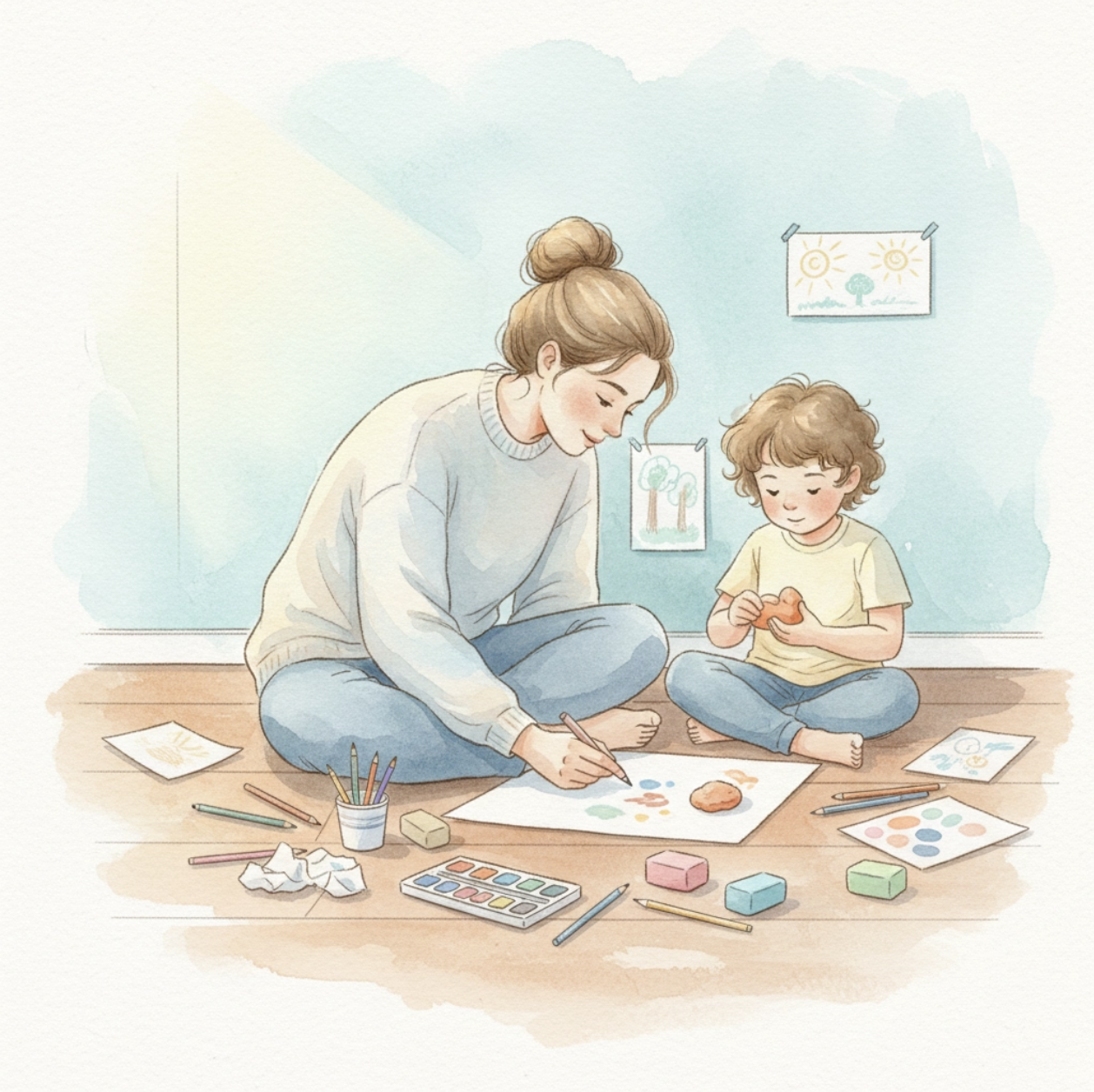
The technique I'm about to share isn't about distracting your child or bribing them to stop crying. It's about using creativity as a bridge to co-regulation, that beautiful process where your calm nervous system helps regulate theirs.
Here's the foundation: creativity bypasses the thinking brain and speaks directly to the emotional brain. When we engage in creative expression, we activate the same neural pathways associated with play and safety. It's like sending a gentle message to your child's nervous system that says, "You're safe. We can explore this feeling together."
The beauty of this approach? It works just as well for you as it does for your child. Because let's be honest, managing our own emotional responses during meltdowns is half the battle.
The Step-by-Step 3-Minute Reset
Minute One: Ground and Gather
First, take three deep breaths (yes, you've heard this before, but stay with me). Then, quickly gather any creative materials within arm's reach. We're talking basics here:
Paper and crayons
Play dough or modelling clay
Even a pen and napkin will do
Craft sticks, tape, anything tactile
The key is not to leave your child to search for supplies, that creates more distance when what they need is connection.
Pro tip: I keep a small "emergency creativity kit" in a basket by our sofa. Nothing fancy, just paper, a few crayons, some pipe cleaners, and small blocks. Game changer.
Minute Two: Create Alongside, Not Above
This is crucial: you're not creating for your child or trying to direct their creativity. You're creating with them, parallel play style.
Sit down at their level (this physically signals safety and equality) and start creating your own simple something. Maybe you're drawing swirls that represent your own frustrated feelings, or rolling play dough into little stress balls.
Start narrating your process, not to your child, but almost to yourself: "I'm feeling quite frustrated right now, so I'm going to make some angry red scribbles... Oh, that feels a bit better already."
This models emotional regulation without pressure. You're showing rather than telling.
Minute Three: Invite Without Insisting
Now comes the gentle invitation. Your child might still be upset, and that's completely okay. The goal isn't to stop their emotions but to offer connection through their emotions.
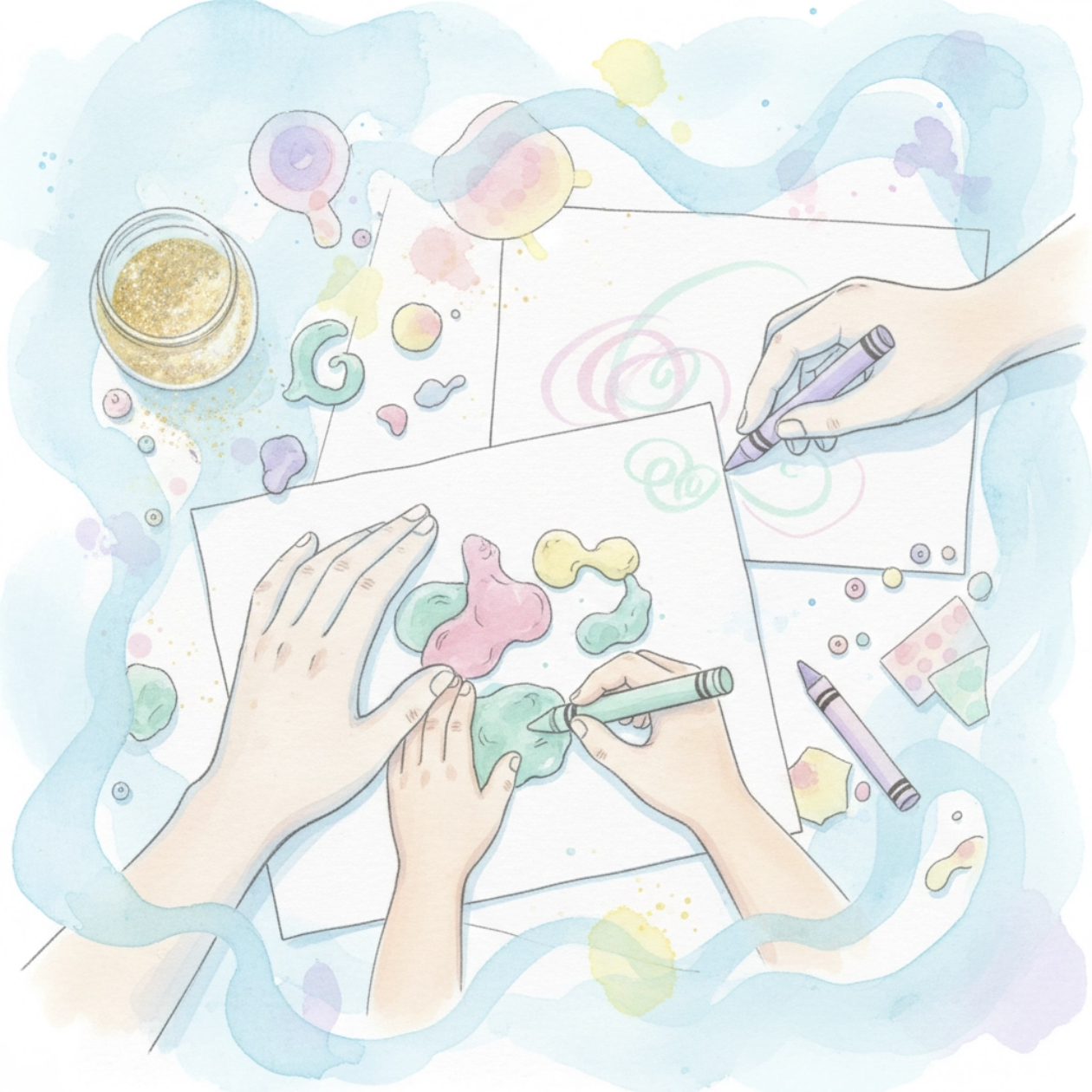
"I wonder if you'd like to show me how your feelings look on paper?"
"Would you like to make something angry with me?"
"I'm going to make a sad colour mix: want to help?"
Some children will dive in immediately. Others might watch suspiciously before slowly joining in. Some might continue melting down while simultaneously creating. All of these responses are perfect.
Why This Works (The Science Bit)
There's genuine neuroscience backing this approach, and it's fascinatingly simple:
Bilateral stimulation: Drawing, moulding, and creating, engage both hemispheres of the brain, which helps integrate emotional experiences. This is why art therapy is so effective for processing trauma and big emotions.
Sensory regulation: The tactile experience of creative materials provides proprioceptive input, which naturally calms the nervous system. Ever noticed how adults fidget with pens during stressful meetings? Same principle.
Co-regulation through mirroring: When you create alongside your child without judgment, you're providing what researchers call "co-regulation": your regulated nervous system helps regulate theirs through proximity and shared experience.
Real-Life Success Stories
So back to my Sister-in-Law I asked if she had any craft items in the house, she had a few bits at the back of the cupboard, we foudn a small box a couple of pipecleaners, some glue and a few crayons, and we sat together still with a very upset little boy, and i just startedcraftign infrount of him, nothing i stuck some bits to the box and slowly iaskedhimif hed like to try, there was some push back at first but after 10 mins he was fully engaged and building his own emotion eatign monster. By 15 mins, he was laughing and back to his old self again; his mum was shocked; apparently, that was the quickest meltdown and recovery she had ever seen him do, and now he had a tool to help him next time as well.
Addressing the "But I'm Not Creative" Objection
I hear this constantly: "But Sam, I'm not artistic. I can barely draw stick figures!"
Good news: you don't need to be artistic. In fact, "bad" art often works better because it removes performance pressure. Your wonky drawings and lumpy clay creatures give your child permission to create imperfectly, too.
Remember: this isn't about creating beautiful art. Im not asking you to Instagram anything you make. In fact, I actively discourage it, It's about creating connection through shared creative expression. Your enthusiasm matters infinitely more than your skill level. And the more you can laugh at your wonky creations and smile at your imperfections, will your child will build emotional resiliency around their own.
Variations for Different Ages and Personalities
For toddlers (18 months - 3 years): Focus on sensory experiences. Water play, finger painting, or even just tearing paper can be incredibly regulating. Keep it simple and follow their lead.
For preschoolers (3-5 years): They might enjoy "feelings sculptures" with play dough or drawing their emotions as weather patterns. This age group often loves the narrative aspect: "Tell me about your angry tornado!"
For school-age children (6+ years): They can handle more complex projects like collages about their day or creating comic strips about their frustrating experiences. Sometimes they enjoy the problem-solving aspect of building something with blocks or craft materials.
For highly sensitive children: Start even gentler. Sometimes just offering them a soft brush to stroke while you create nearby is enough. Watch for overwhelm and dial back as needed.
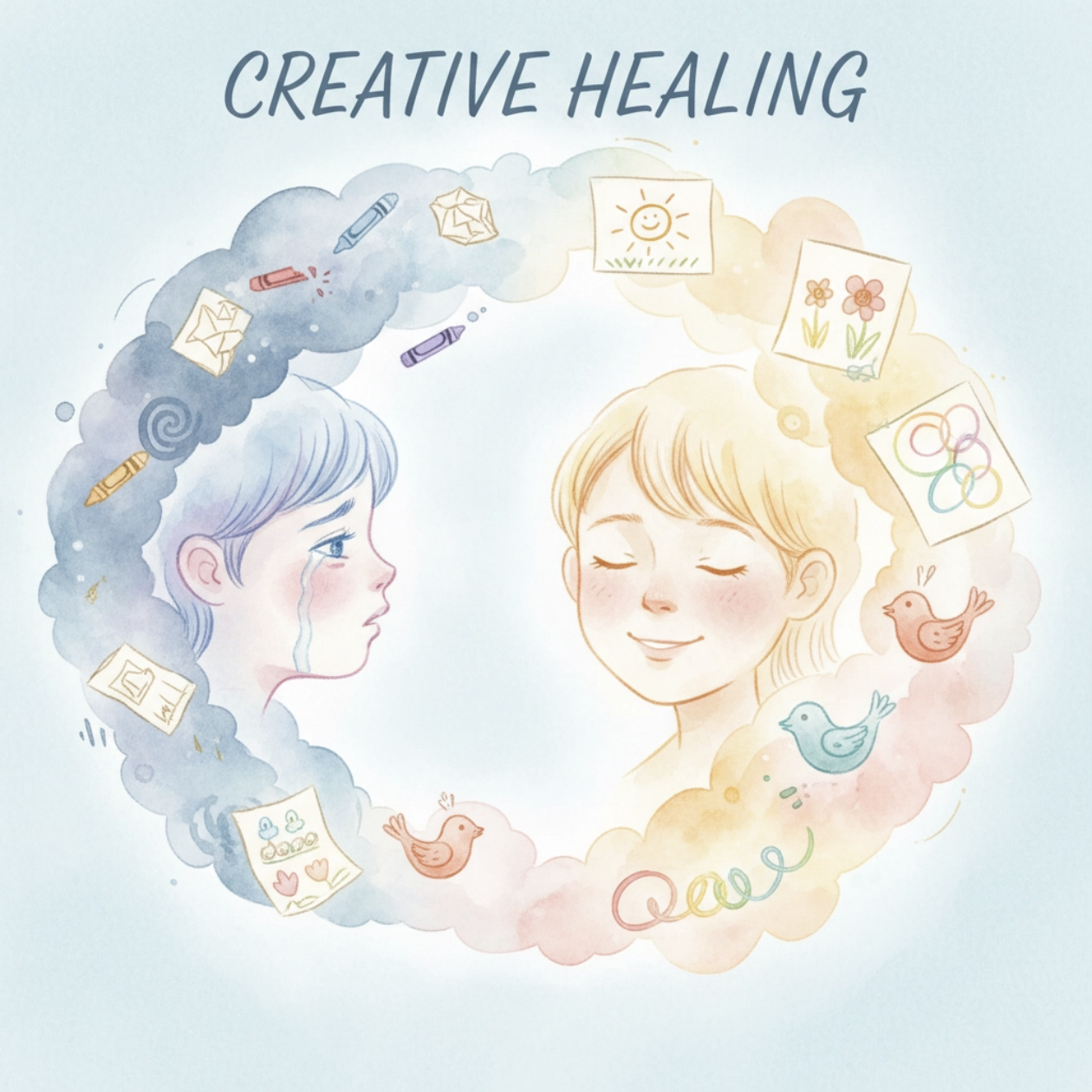
When It Doesn't Work (And That's Okay Too)
Let's be real: no technique works 100% of the time, and any advice that suggests otherwise is setting you up for failure. Some days, your child will be too dysregulated for creative connection. Some days, you'll be too overwhelmed to remember this technique exists.
On those days, basic comfort and safety come first. There's no shame in reverting to snuggles, quiet time, or whatever gets everyone through the moment. This creativity trick is a tool in your toolkit, not a magic wand.
Making It Sustainable
The beauty of this approach is that it gets easier with practice: for both you and your child. As you build these neural pathways together, creative regulation becomes a natural response rather than a conscious technique.
Consider creating dedicated "creativity zones" in your home where materials are easily accessible. This doesn't require Pinterest-worthy organisation: a simple basket with basic supplies near your main living area works perfectly.
The Ripple Effect: Connection Beyond the Meltdown
Here's what surprised me most about this technique: the connection doesn't end when the meltdown does. Children who experience creative co-regulation during their hardest moments learn that their big feelings are manageable and that you're a safe person to feel them with.
These children often start reaching for creative materials proactively when they feel overwhelmed. They develop what researchers call "emotional granularity": the ability to identify and express specific feelings rather than just "good" or "bad."
For more insights on building resilience and connection through creative approaches, you might find our thoughts on therapeutic art and building resilience helpful.
Your Turn to Try
The next time meltdown chaos erupts in your home (because it will: you're human, and so is your child), remember this simple sequence: Ground and Gather, Create Alongside, Invite Without Insisting. Three minutes. Basic materials. No pressure for perfection.
And if it doesn't work the first time? That's data, not failure. Notice what happened, adjust for next time, and celebrate the fact that you tried something new.
Because I've learned through countless meltdowns, both at work and at home: our children don't need us to be perfect. They need us to be present, creative, and willing to meet them where they are.
Even if where they are involves tears, frustration, and the occasional sock that "feels wrong."
What creative materials do you already have accessible for those inevitable meltdown moments? I'd love to hear about your experiences with creativity during challenging parenting moments( share your stories in the comments below.)