Remember when adult colouring books were everywhere? I'm talking 2015-2016, when your local bookstore had entire displays dedicated to "Mandala Magic" and "Swear Word colouring for Stressed-Out Adults." I'll admit it, I bought three of them. One stayed pristine on my coffee table (obviously for show), one got exactly four pages colored before being abandoned under a pile of laundry, and the third... well, let's just say my toddler discovered it and decided purple was the perfect colour for everything.
Fast-forward to today, and those colouring books are probably buried somewhere in your junk drawer, right next to the fidget spinner you bought during that trend. Here's the thing: adult colouring books aren't just gathering dust in your home, they've essentially flatlined as a cultural phenomenon. And honestly? Good riddance.
Don't get me wrong, if colouring mandalas still brings you joy, keep doing it! But for most of us, there's something infinitely more powerful waiting to transform our wellbeing. Something that doesn't involve staying inside the lines or following someone else's predetermined design.
The Great Adult Colouring Book Crash
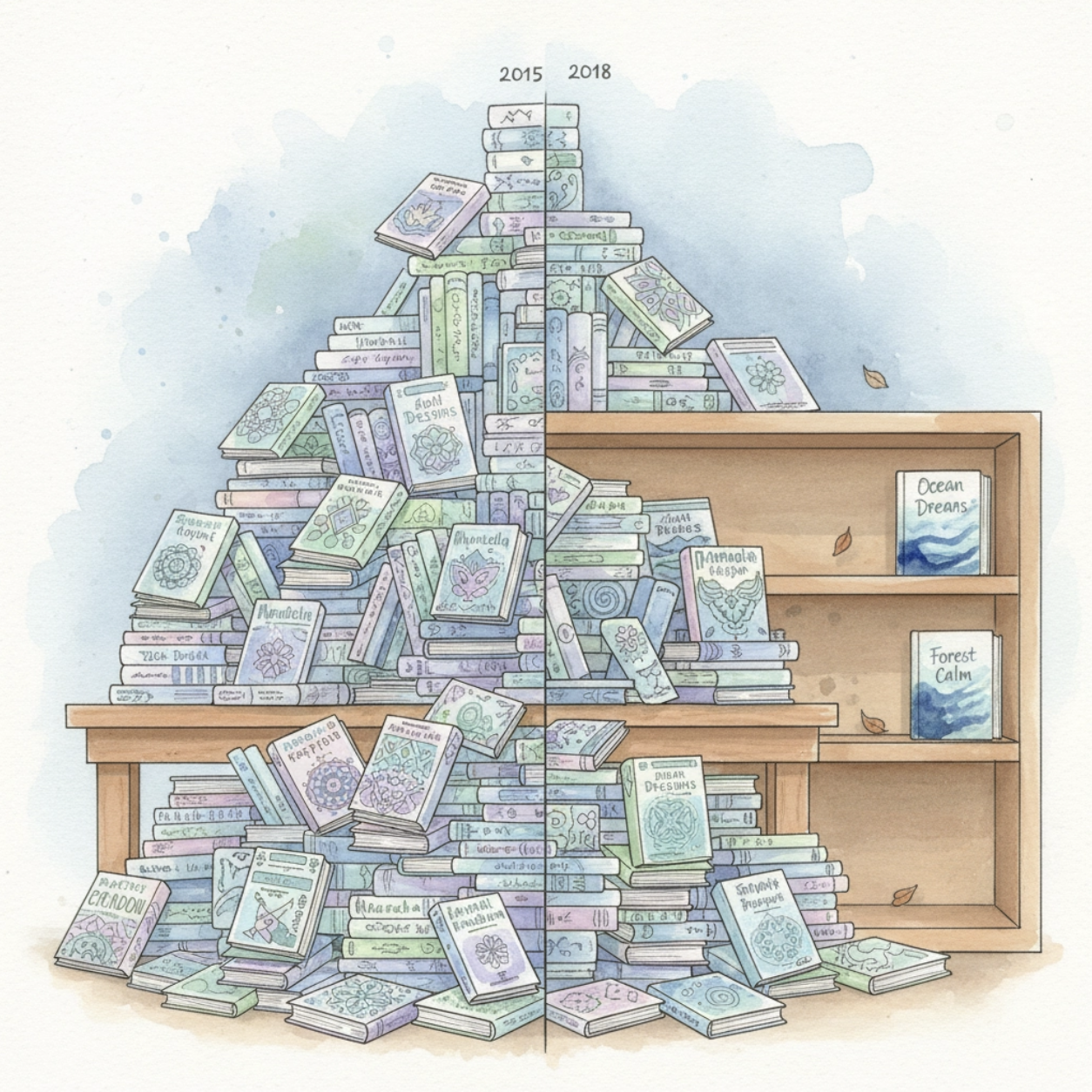
Let's talk numbers for a hot minute. In 2015, adult colouring books absolutely dominated; nine of the top 20 bestselling books on Amazon were colouring books. By 2018? Only two made the list. That's not a gentle decline; that's a spectacular crash landing.
What went wrong? Three major culprits killed the colouring craze:
Market oversaturation hit hard. When publishers realised there was money to be made, they flooded the market with countless titles. Suddenly, choosing a colouring book became more overwhelming than relaxing. "Zen Gardens," "Adult Swear Words," "Intricate Patterns," "Disney Characters", the options were endless and exhaustingly similar.
The novelty wore off faster than expected. Remember how revolutionary it felt to colour as an adult? That initial thrill of rebellion against "grown-up" expectations? Yeah, that lasted about three months for most people. By summer 2016, many had abandoned their coloured pencils for Pokémon Go (remember that cultural moment?).
Real life got more stressful, not less. Here's where it gets interesting: as global anxiety increased, people stopped believing that colouring could provide genuine stress relief. When your kid is having a meltdown, your work deadline is tomorrow, and the news cycle is... well, the news cycle, colouring inside predetermined lines starts feeling pretty inadequate.
What We Actually Need for Creative Wellbeing
Here's what I've learned from years of working with families and individuals seeking creative outlets: we don't need more passive activities. We need active creativity that engages our problem-solving skills, connects us with others, and helps us process our actual experiences.
Think about it, when you're colouring someone else's mandala design, you're essentially following instructions. There's minimal decision-making, no personal expression, and zero connection to your real life. It's meditation-adjacent, sure, but it's also emotionally distant.
What our stressed-out brains actually crave:
Creative problem-solving that builds confidence
Self-expression that validates our experiences
Activities that strengthen relationships
Opportunities to process emotions through making
This is where therapeutic art journaling comes in, and no, I don't mean the Pinterest-perfect bullet journals that make you feel inadequate about your handwriting.
The Alternative: Messy, Real, Healing Art Journaling
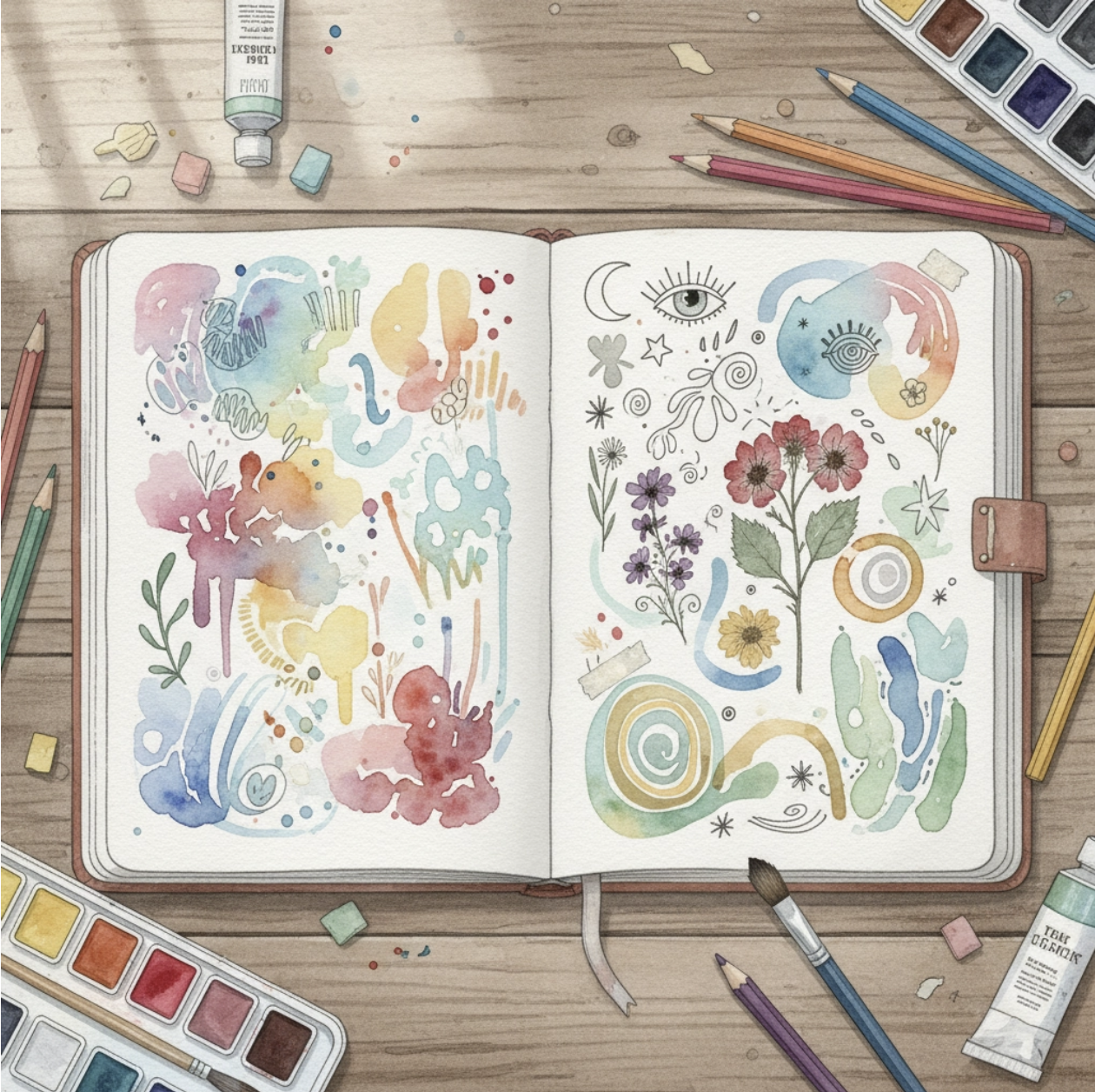
Art journaling is like colouring books' rebellious, emotionally intelligent cousin. Instead of filling in someone else's vision, you're creating your own visual language for whatever you're experiencing. Some days that might be beautiful; other days it might look like a toddler got loose with finger paints. Both are perfect.
Why art journaling works when colouring books don't:
It meets you where you are. Had a terrible day? Scribble it out with angry red marks. Feeling grateful? Layer on some golden watercolour washes. Your art journal doesn't judge; it just receives whatever you're offering.
It builds actual skills. Unlike colouring, where you're constrained by existing lines, art journaling teaches you to make choices, solve visual problems, and develop your own style. These skills transfer to other areas of life (seriously, creative confidence shows up everywhere).
It connects you to your real life. Instead of escaping into someone else's mandala, you're processing your actual experiences. That argument with your partner, your child's first day of school, the way sunlight looked in your kitchen this morning, it all becomes material for exploration.
How to Start (Without Becoming Overwhelmed)
Every time I mention art journaling, someone inevitably says, "But I'm not artistic!" Listen, if you can doodle during a boring meeting, you can art journal. This isn't about creating gallery-worthy pieces: it's about developing a visual language for your inner life.
Start ridiculously simple:
Grab any notebook and a few basic supplies (even a black pen works)
Set a timer for 10 minutes
Ask yourself: "What am I feeling right now?"
Put that feeling on paper: colour, shape, words, doodles, whatever comes
Your first page might be:
Three colours that represent your mood
A word written in bubble letters
Abstract shapes that feel like your day
A simple drawing of something that made you smile
The goal isn't beauty: it's connection. Connection to yourself, your experiences, and your creative capacity.
Make It a Family Affair
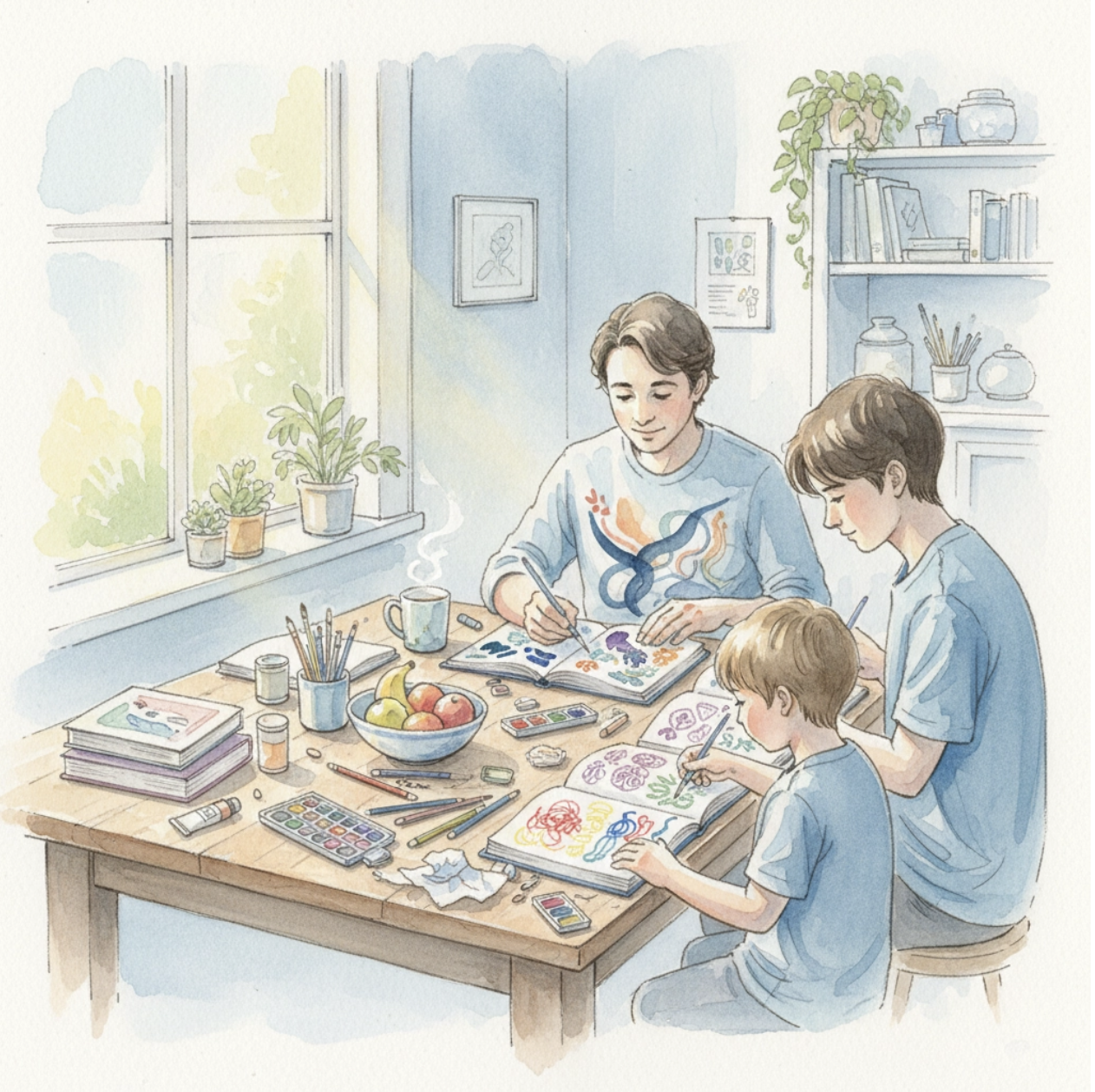
Here's where art journaling becomes infinitely more powerful than solo colouring: you can do it with your kids. Not the Pinterest-perfect family art time you see on social media, but real, messy, emotion-processing creativity.
Try this: Give everyone in your family their own journal and the same basic prompt: "Draw how you felt today." Don't correct anyone's technique or suggest improvements. Just create alongside each other, then share (only if people want to).
What happens is magical. Your 5-year-old might scribble angry purple clouds because their friend wasn't nice at school. Your teenager might create an intricate pattern while processing friendship drama. You might find yourself drawing the weight you've been carrying all week. Suddenly, you're all connecting through creativity instead of trying to fix each other's problems.
Beyond the Journal: Expanding Your Creative Wellbeing Practice
Once you've established an art journaling habit (and trust me, once you start, it becomes addictive in the best way), you can expand into other active creative practices:
Mixed media exploration: Add magazine cutouts, fabric scraps, or pressed flowers to your pages. Let your journal become a treasure chest of textures and memories.
Photo integration: Print small photos and incorporate them into your pages with drawing, painting, or collage. Document your life while processing it creatively.
Collaborative projects: Start a shared journal with your partner, child, or friend. Pass it back and forth, building on each other's entries.
Seasonal reflections: Use your journal to mark transitions: the end of summer, your child's birthday, major life changes. Create visual markers for the passage of time.
The Real Difference
Adult colouring books promised stress relief through repetitive action: essentially, creative busy work. Art journaling offers something far more valuable: emotional processing through authentic self-expression.
When my friend Sarah started art journaling last year, she told me, "It's like finally having conversations with myself that I've been avoiding for years." She's not creating museum pieces, but she's developing emotional intelligence, creative confidence, and a deeper understanding of her own experiences.
That's something no pre-drawn mandala can provide.
Ready to Get Started?
The beautiful thing about art journaling is that you probably have everything you need already. A notebook, some pens or pencils, maybe some old magazines for collaging: that's it. No special supplies, no perfect setup, no artistic training required.
If you're looking for more support as you begin this practice, our therapeutic art resources explore how creative expression builds resilience and connection. Because that's what we're really after: not perfect colouring, but authentic connection to ourselves and others.
Your art journal is waiting for you to mess it up beautifully. Trust me, it's going to be so much better than staying inside someone else's lines.